

Dimension 1
Leadership and Governance
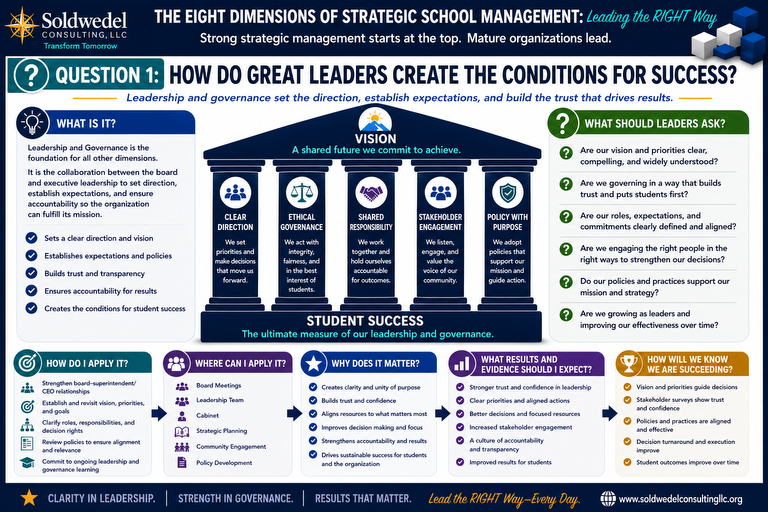
Leadership and governance set the direction, establish expectations, and build the trust that drives results.
Download the poster
Learn It
Book One
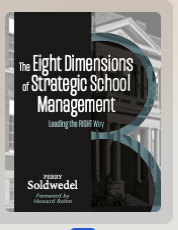
Author Perry Soldwedel delves into the core tenets of strategic management and strategic thinking and planning as crucial for building successful school systems. He demonstrates how school leadership can effectively implement robust strategies and cultivate a thriving school culture that emphasizes sustainability. In this environment, students are encouraged in their learning, teachers find support for professional development, and administrators can make well-informed executive decisions.
This book will help K–12 district and school leaders:
The Framework Behind the Book
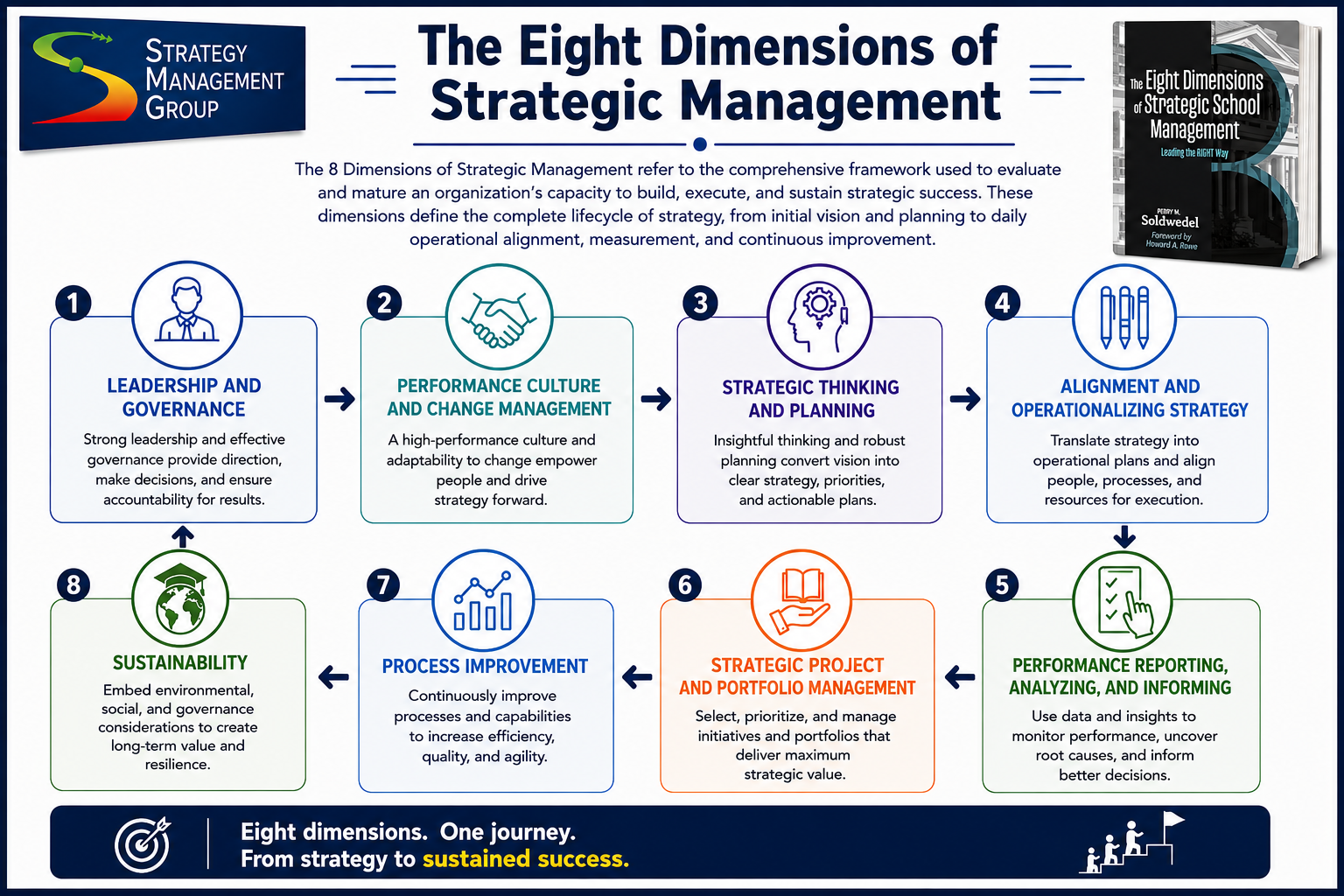
Leadership and governance set the direction, establish expectations, and build the trust that drives results.
Download the poster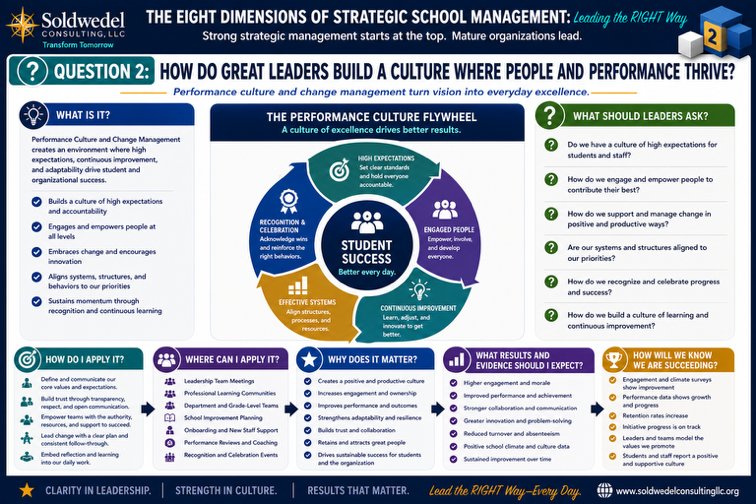
Performance culture and change management turn vision into everyday excellence.
Download the poster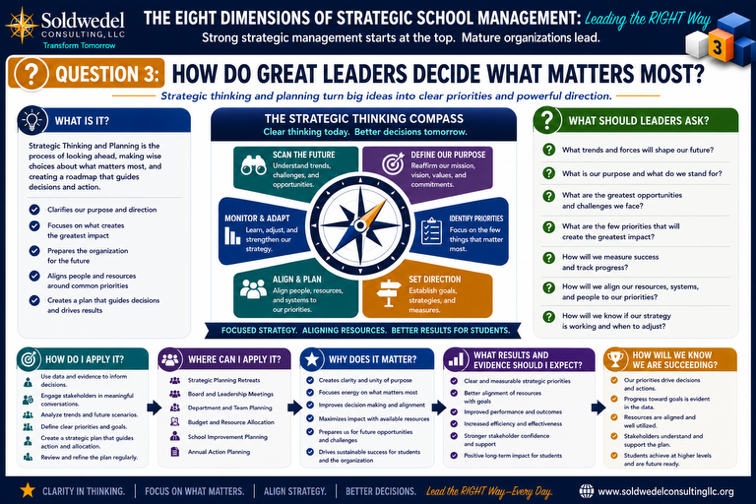
Strategic thinking and planning turn big ideas into clear priorities and powerful direction.
Download the poster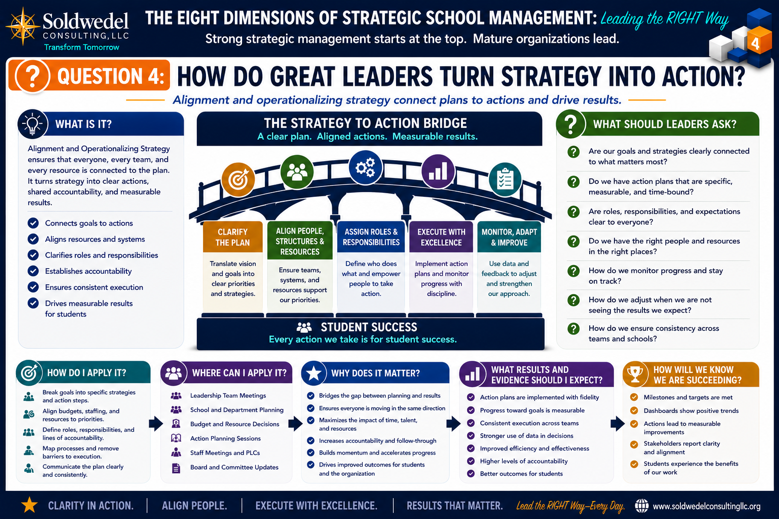
Alignment and operationalizing strategy connect plans to actions and drive results.
Download the poster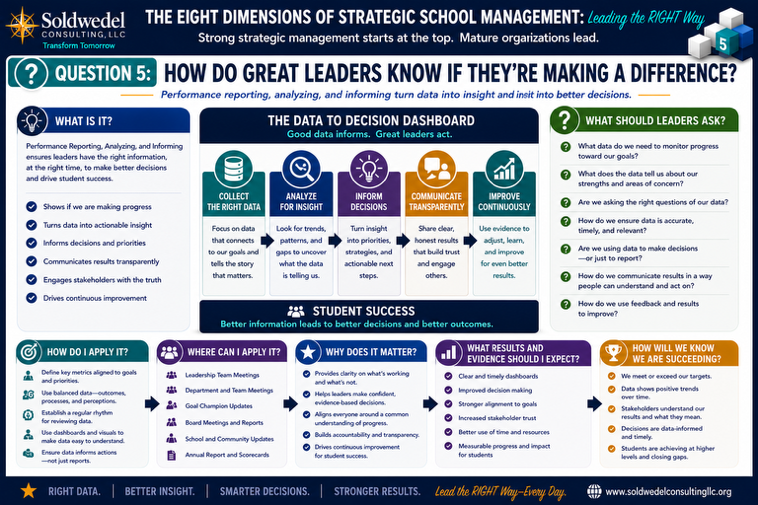
Performance reporting, analyzing, and informing turn data into insight and insight into better decisions.
Download the poster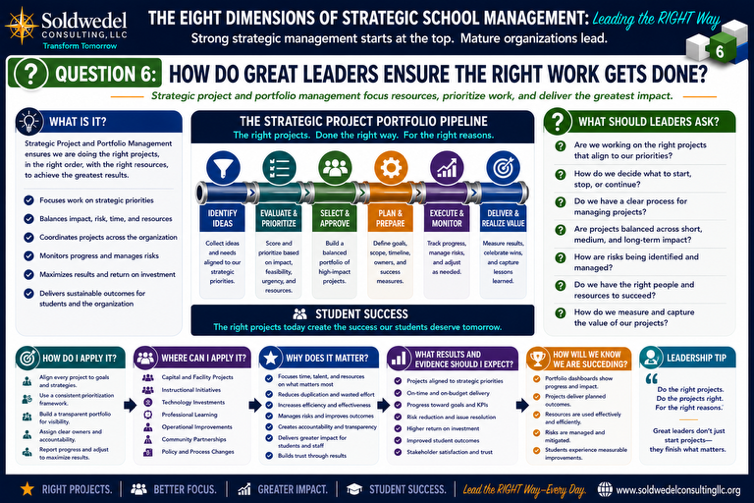
Strategic project and portfolio management focus resources, prioritize work, and deliver the greatest impact.
Download the poster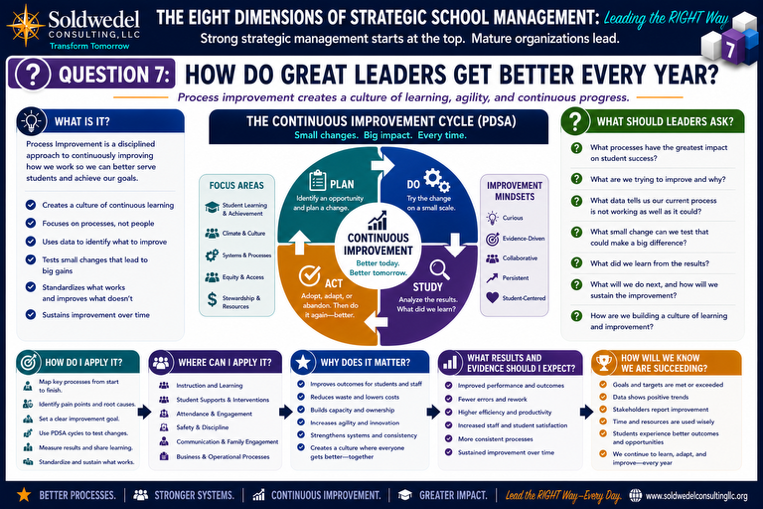
Process improvement creates a culture of learning, agility, and continuous progress.
Download the poster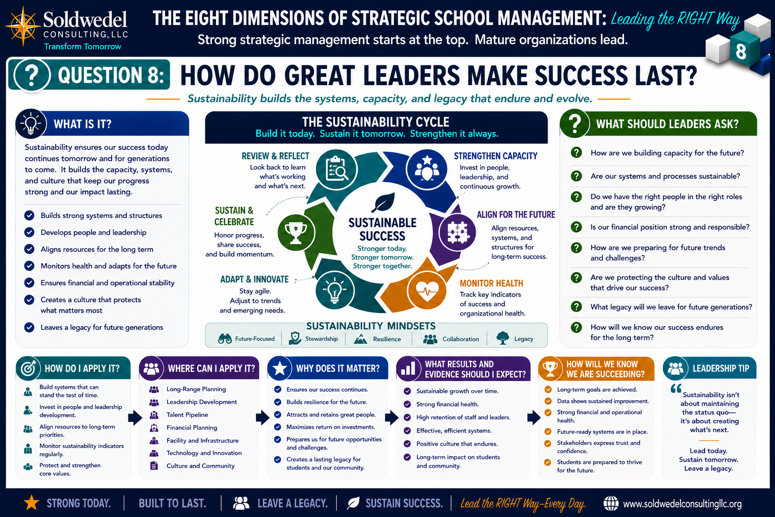
Sustainability builds the systems, capacity, and legacy that endure and evolve.
Download the posterAssessment Tool
To assist leaders in each district periodically access they progress in applying the 8 Dimensions for Strategically management we have developed with the Strategy Management Group an assessment survey.
For each of these eight dimensions, there are five levels of strategic management maturity:
It is characteristic of organizations at this level that they currently do not do any strategic planning or management in a formal sense, tending to plan only on the tactical or operational level in an ad hoc and uncontrolled manner, normally by senior management behind closed doors. Leaders spend a majority of their time addressing operational issues and “putting out fires” and never address long-term strategy.
It is characteristic of organizations at this level that some elements of effective planning and strategic performance management are being applied, only in an inconsistent fashion and often with poor results. Planning discipline is unlikely to be rigorous and only happens in reaction to events or to temporarily please an individual leader. These organizations might measure performance or even use it to punish underperformers, but often these activities are done by individuals to meet a routine policy need and are not taken seriously.
It is characteristic of organizations at this level that there are formal structures and processes in place to comprehensively and proactively engage in strategic planning and management. These activities occur on a fairly regular basis and are subject to some degree of improvement over time. Measurements are somewhat aligned with strategy and employee accountability is taken seriously.
It is characteristic of organizations at this level that strategy drives focus and decision making for the organization. Organization-wide standards and methods are broadly implemented for strategy management. Leaders formally engage employees in the process, and a measurement & accountability work culture help drive strategic success for the organization.
It is a characteristic of organizations at this level that the strategic planning and management excellence are embedded within the culture of the organization and are continuously improved in a formal sense. This means that as performance is evaluated, the organization first analyzes how it is performing towards its strategic goals and then second studies how effective the strategic planning and management processes are and adapts as necessary. Excellence in strategic management drives the organization’s competitive edge or performance success.
We recommend the survey be administered annually. We recommend the first time the survey is given all members or the board of education, the management team, and the union leadership team take the survey. After the first year we recommend a school district grow the number of participants. New groups to consider include a District Leadership Team/Improvement Team, all School Leadership Teams/Improvement Teams, all Teacher Leaders (grade level, department, division chairs, instructional coaches, etc.)
Contact Soldwedel Consulting to assist you in administering, analyzing and reporting survey results.
Contact Soldwedel ConsultingAlso if you are interested in using the assessment survey, we have developed a more formative assessment for each dimension. If a school would select Dimension 4 Alignment and Operationalizing Strategy as their improvement target for the year they might want to give Dimension 4 Alignment and Operationalizing Strategy formative 10 question survey fall, winter, and spring to track progress.
Book Two
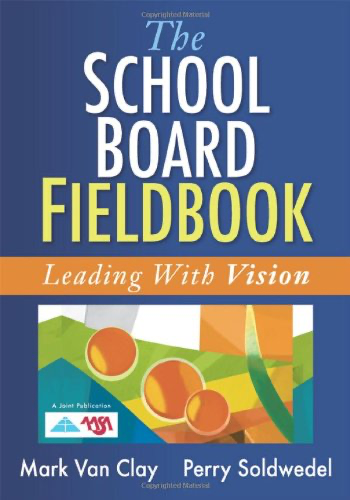
Take a reader-friendly tour through the responsibilities and challenges of being a school board member. Written by experienced, award-winning administrators, this book gives practical guidance on how to best work with school administrators and staff to create and fulfill a shared vision of school system excellence. This clear, concise book helps new board members understand the difference between their expectations and actual duties.
Book Three
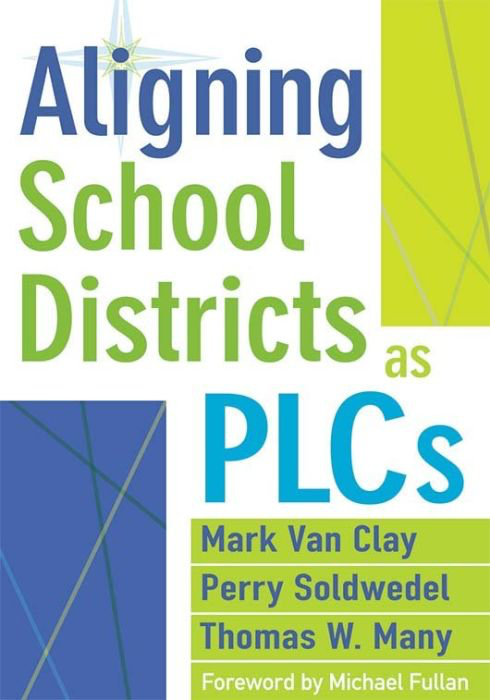
In order for a professional learning community to achieve its full potential, all levels districtwide must align with the three big ideas: ensuring a focus on learning, building a collaborative culture, and establishing a results orientation. This book breaks down the complex process of aligning the work of central office staff, building leadership, and teachers to increase student achievement.